

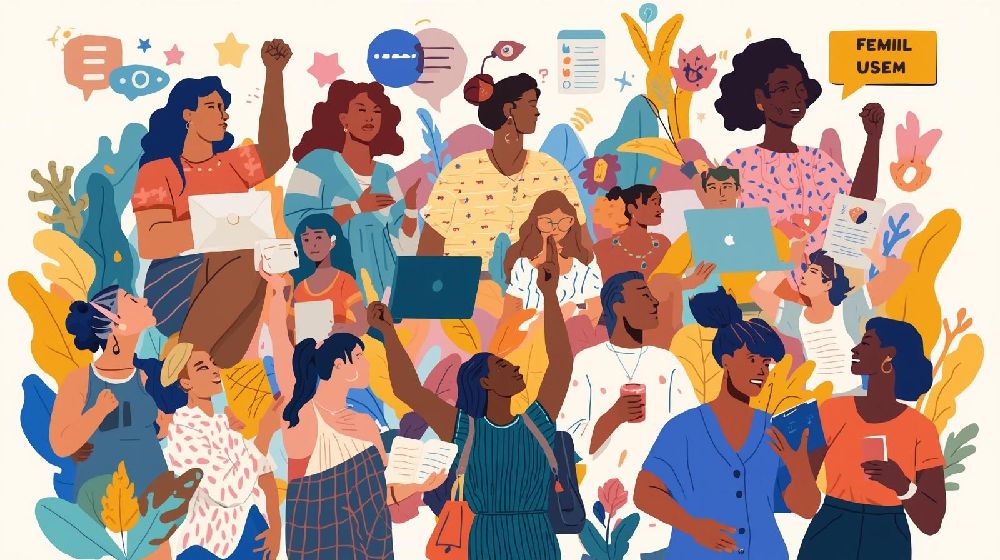
Feminism has always evolved with time. From street marches and sit-ins to policy advocacy and legal reform, the movement has adapted to the tools available in each era. Today, in a hyper-connected world, feminism has entered a powerful new phase—digital feminism, where activism extends far beyond physical protests into the online space.
Digital feminism is not a replacement for on-ground movements; it is an amplifier, a connector, and a catalyst for change.
What Is Digital Feminism?
Digital feminism refers to the use of digital platforms, social media, online communities, and technology to advocate for gender equality, women’s rights, and social justice.
It includes:
Online campaigns and hashtags
Educational content and storytelling
Digital petitions and advocacy
Virtual support networks
Data-driven activism
Through smartphones and screens, feminist voices now reach millions across borders.
From Streets to Screens: How Activism Has Expanded
Traditional protests are powerful but limited by geography, safety, and access. Digital platforms remove these barriers.
Online activism allows:
Participation without physical presence
Anonymity for survivors and whistleblowers
Global solidarity across cultures
Faster mobilization and awareness
This shift has made feminism more inclusive and accessible.
Social Media as a Tool for Change
Platforms like X, Instagram, YouTube, and LinkedIn have become modern spaces for feminist dialogue.
1. Hashtag Movements
Campaigns such as #MeToo and #TimesUp demonstrated how shared experiences can challenge systemic silence. A single post can spark global conversations and policy debates.
2. Storytelling and Visibility
Personal narratives humanize issues like workplace discrimination, domestic violence, and unpaid labor. These stories create empathy—and empathy drives action.
Education as Everyday Activism
Digital feminism thrives on knowledge sharing.
Creators and organizations use:
Infographics explaining laws and rights
Short videos debunking gender myths
Online workshops and webinars
Open-access research and reports
Education transforms passive viewers into informed advocates.
Beyond Awareness: Real-World Impact
Critics often dismiss digital activism as “clicktivism,” but its influence is real.
Digital feminist efforts have:
Pressured institutions to reform policies
Exposed harassment and abuse
Influenced elections and corporate practices
Strengthened legal and social accountability
Online pressure often leads to offline consequences.
Building Safe Digital Spaces
Another critical role of digital feminism is creating support systems.
Online platforms provide:
Safe spaces for survivors to speak
Mental health resources
Peer support and mentorship
Legal and helpline information
For many women, the internet is the first place they are heard.
Challenges Digital Feminism Faces
While powerful, digital feminism also faces obstacles:
Online harassment and trolling
Misinformation and backlash
Algorithmic bias
Digital access gaps
Addressing these challenges requires stronger platform policies and digital literacy.
The Future of Feminist Activism
As technology advances, digital feminism will grow through:
AI-driven advocacy tools
Virtual reality awareness campaigns
Secure digital reporting systems
Global feminist networks
The future of activism lies in hybrid movements—where online momentum fuels offline change.
Final Thoughts
Digital feminism proves that activism doesn’t always require a placard or a march. Sometimes, it begins with a post, a shared story, or a conversation that challenges norms.
In a connected world, every voice counts—and every click can contribute to change. Feminism today is not confined to the streets; it lives on screens, in communities, and in collective digital action that reshapes society.