

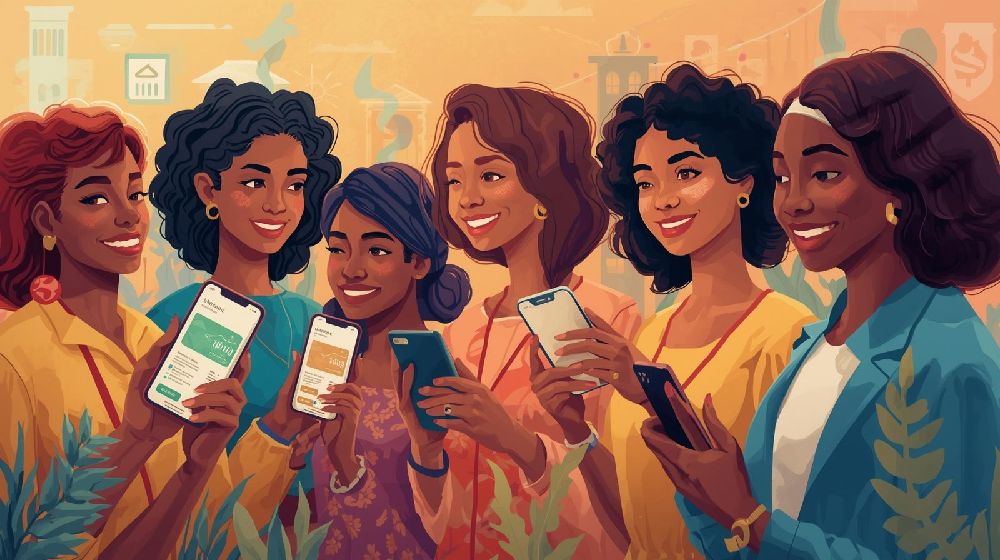
Access to financial services is a key driver of economic empowerment, and mobile banking has emerged as a game-changer for women around the world. By providing convenient, secure, and accessible financial tools, mobile banking is enabling women to manage money, save for the future, and participate more fully in economic life.
The Importance of Financial Inclusion
Financial inclusion means ensuring that individuals, regardless of gender or location, have access to banking services such as savings accounts, loans, insurance, and digital payment systems. For women, especially in rural or underserved areas, access to formal financial services can be limited. Mobile banking bridges this gap, providing tools that were previously out of reach.
Inclusion strengthens independence and economic confidence.
How Mobile Banking Empowers Women
Convenience and Accessibility: Mobile banking eliminates the need to travel long distances to a bank, making it easier for women with household responsibilities or mobility constraints to access services.
Financial Independence: Women can control their own savings, manage expenses, and make investments directly through their phones, fostering autonomy and decision-making power.
Safety and Security: Digital transactions reduce the risks associated with carrying cash and allow women to track and manage their finances safely.
Access to Credit and Loans: Mobile banking apps often offer microloans or credit products tailored for women entrepreneurs, enabling them to start businesses or invest in education and health.
Mobile banking is more than technology—it’s a tool for empowerment.
Driving Entrepreneurship and Income Opportunities
Women entrepreneurs benefit greatly from mobile banking. Digital payments, online invoicing, and instant transfers make business operations smoother, even for small-scale or home-based ventures. Access to savings, credit, and insurance allows women to scale their businesses and plan for growth.
Financial tools unlock entrepreneurial potential.
Overcoming Barriers to Adoption
Despite its advantages, challenges remain. Limited digital literacy, lack of smartphone access, and cultural norms can restrict women’s use of mobile banking. Addressing these barriers through education, community programs, and simplified user interfaces is essential for achieving true financial inclusion.
Empowerment begins with awareness and accessibility.
Success Stories and Global Impact
In countries across Asia, Africa, and Latin America, mobile banking has transformed women’s lives. From saving for children’s education to launching small businesses, women are leveraging digital financial services to achieve economic independence. These stories highlight how technology, combined with inclusion efforts, can drive meaningful social change.
Every successful user demonstrates the power of accessibility.
The Road Ahead
For governments, financial institutions, and NGOs, promoting mobile banking for women is a priority. Initiatives focusing on digital literacy, gender-sensitive financial products, and mobile infrastructure can expand access and ensure that women everywhere can participate fully in the economy.
Financial inclusion is not just a policy—it’s a pathway to empowerment.
Conclusion
Mobile banking is revolutionizing the way women manage money, invest in their futures, and pursue economic independence. By reducing barriers and offering secure, flexible tools, mobile financial services are making empowerment tangible and accessible. When women gain access to these tools, communities thrive, economies grow, and equality moves closer to reality.
Financial inclusion through mobile banking is more than convenience—it’s transformation in the palm of her hand.