

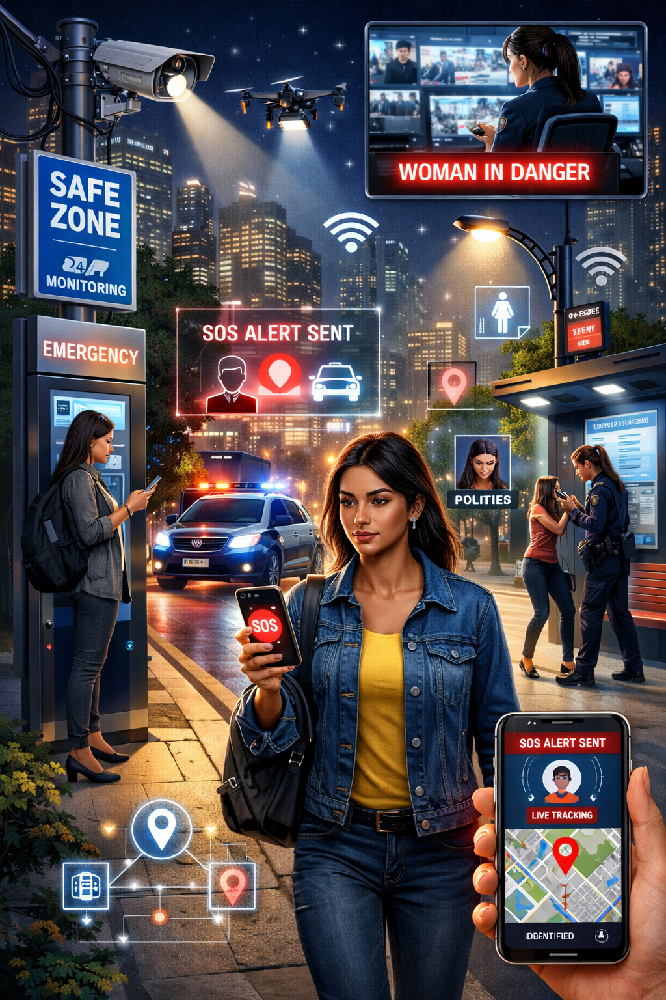
As cities grow smarter through technology, infrastructure, and data-driven planning, one critical priority is gaining long-overdue attention: women’s safety. A truly smart city is not defined only by digital connectivity or efficient transport, but by how safe, inclusive, and responsive it is for women at every hour of the day.
Why Women’s Safety Is Central to Smart City Planning
Women experience cities differently. Daily routines—commuting, working late hours, caregiving, or traveling alone—often come with heightened safety concerns. Smart city initiatives recognize that safety is foundational to participation, mobility, and equality.
When women feel safe, cities become more productive, inclusive, and resilient.
Technology-Driven Safety Solutions
Smart cities are leveraging technology to address safety challenges in innovative ways:
Smart Surveillance Systems
AI-enabled CCTV cameras help monitor public spaces, detect unusual behavior, and alert authorities in real time, improving response speed and deterrence.
Emergency Response Apps
Mobile safety apps allow women to send SOS alerts, share live locations, and connect instantly with emergency services or trusted contacts.
Smart Street Lighting
Adaptive lighting systems automatically adjust brightness based on movement and time, reducing dark zones and improving visibility in public areas.
Data and AI for Safer Urban Design
Data plays a crucial role in identifying high-risk zones. By analyzing crime patterns, foot traffic, and lighting gaps, city planners can redesign streets, transport hubs, and public spaces to enhance safety.
AI-driven insights help ensure that safety measures are proactive rather than reactive.
Public Transport Innovations
Smart cities are improving safety in buses, trains, and metro systems through:
GPS tracking and panic buttons
Well-lit stations with surveillance
Real-time monitoring of routes and schedules
These innovations help women travel with greater confidence and independence.
Community-Centered Safety Models
Technology alone is not enough. Smart cities also emphasize community involvement through:
Women-led safety audits
Citizen reporting platforms
Collaboration with local authorities and NGOs
Inclusive planning ensures that solutions reflect real experiences and needs.
Challenges and Responsible Innovation
While innovation brings progress, it must be implemented responsibly. Privacy protection, ethical data use, and accessibility are essential to ensure that safety solutions empower rather than surveil.
Smart cities must balance technology with trust.
The Road Ahead
The future of smart cities lies in human-centered design. Integrating safety into urban planning—from roads to digital systems—creates cities where women can live, work, and move freely without fear.
Final Thoughts
Women’s safety innovation is not an optional feature of smart cities—it is a core requirement. By combining technology, data, and inclusive planning, smart cities can build environments where safety is embedded into everyday life, empowering women and strengthening society as a whole.